
SPKL: overtime approved before it happens, not after
Overtime calculated at month end from attendance-machine data always ends in dispute. The overtime work order (SPKL) reverses the sequence: plan, approval, confirmation, actual hours, then payment.

In many factories, overtime is discovered rather than planned: at month end, HR reads the attendance-machine log, multiplies the hours outside the schedule by the rate, and pays. Then the dispute starts: the line head says those hours were never ordered, the employee says they were asked to stay, and finance asks who approved it. The SPKL (Surat Perintah Kerja Lembur, the overtime work order) reverses that sequence, so overtime is approved before it happens and paid for the hours actually worked.
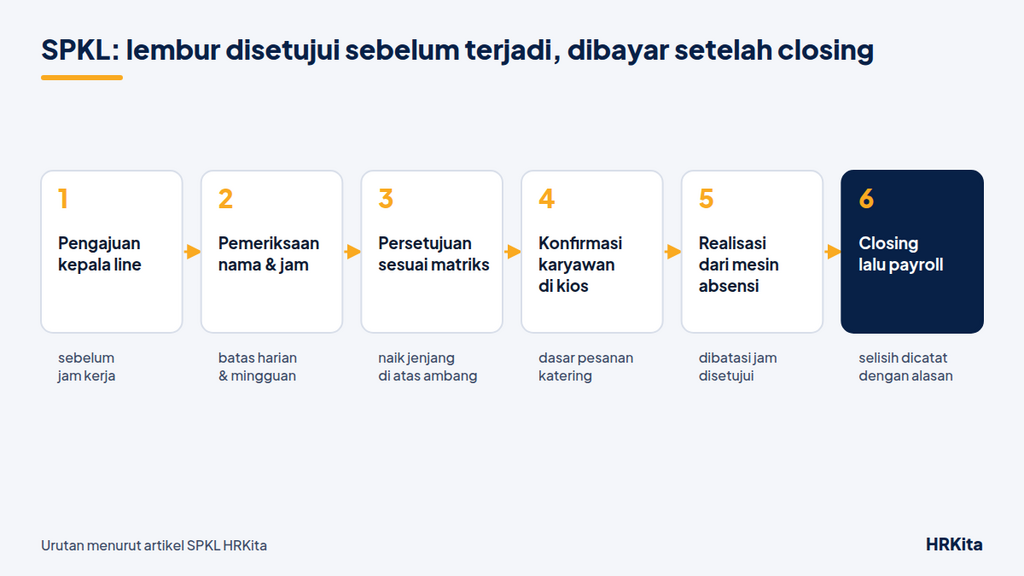
SPKL overtime runs in six steps, from request to close
- Request. The line head plans overtime before the shift starts: names, hours, reason and line. Overtime requested after the fact can still be recorded, but as a visible exception.
- Check. The checker confirms completeness and reasonableness: the names are on the schedule, and the hours do not exceed the daily and weekly limits.
- Approval per matrix. Each unit has its own approval chain. Overtime above an hours threshold or on a holiday goes one level up. Overtime that is not approved does not enter payroll, and everyone can see that before the period closes.
- Employee confirmation. Before overtime starts, the employee scans their card at a kiosk on the factory floor and confirms in or out. The confirmation list drives the catering order.
- Actual hours. Clock-out times from the attendance-machine file determine the hours actually worked, capped by the hours approved.
- Close. Before payroll, HR closes the month's SPKLs. Hours that were approved and worked are paid; the difference is recorded with a reason.
Every party knows the status before overtime starts
| Party | Before | With SPKL |
|---|---|---|
| Line head | Asks verbally, defends at month end | Requests before the shift, sees the status |
| Employee | Learns whether it is paid when the payslip arrives | Knows before overtime starts |
| HR | Interprets machine logs | Reviews exceptions |
| Owner | Total overtime per month | Overtime per unit, approved versus worked, who approved |
Three mistakes send the SPKL back to month-end disputes
- The factory uses one approval chain for every unit, although maintenance and production decide overtime at different levels.
- The factory uses the confirmation kiosk after the meals arrive, so the kiosk only records the loss.
- HR takes actual hours from the SPKL instead of the machine, so planned hours are paid as worked hours.
Two SPKL numbers show the result after three months
The first is the share of SPKLs submitted before overtime starts; it measures planning discipline. The second is the gap between approved and worked hours per unit; it measures whether the plans are realistic. Both come straight from SPKL data with no extra calculation.
In HRKita, payroll reads the closed SPKL, not the machine log
The SPKL in HRKita runs from request to close with a per-unit approval matrix, overtime and catering confirmation kiosks on the factory floor, actual hours from the attendance-machine export, and corrections with an audit trail. Payroll reads the closed result, not the raw machine log. See the flow on the HRKita attendance and overtime page, then book an SPKL demo for your factory.